
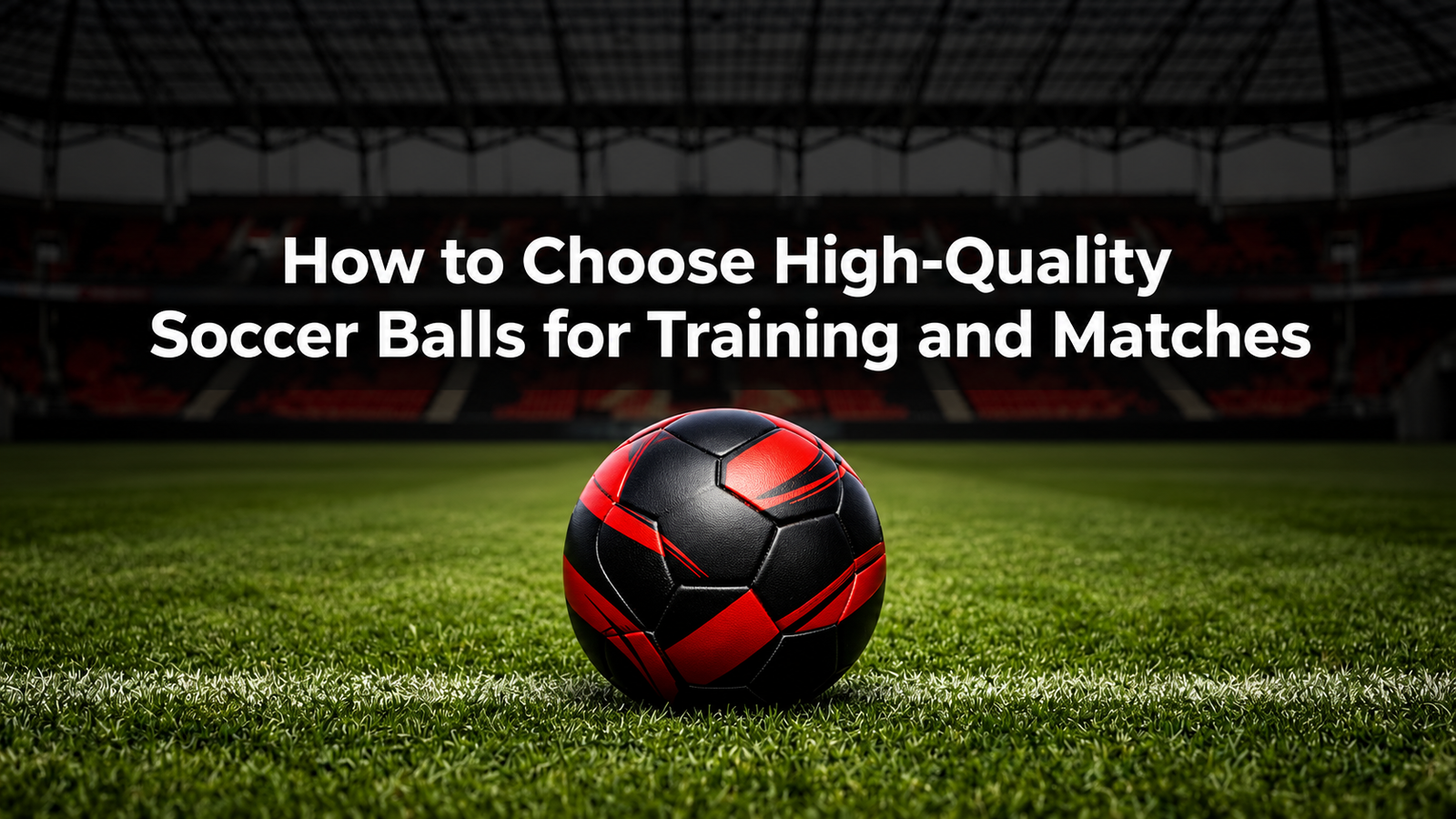
A high-quality soccer ball is essential for enjoyable training sessions, competitive matches, and consistent player development. Whether you’re managing a soccer academy, organizing a professional club, or building a sports equipment brand, selecting the right soccer ball is an important decision.
At First Industrys International, we focus on providing quality soccer equipment that supports performance, durability, and customization for teams and sports brands worldwide.
1. Understanding Different Types of Soccer Balls
Soccer balls are designed for different purposes, playing surfaces, and skill levels.
Training Soccer Balls: Designed for frequent use, offering durability and dependable performance during practice sessions.
Match Soccer Balls: Developed for competitive play, with an emphasis on consistent shape, flight, touch, and construction quality.
Custom Soccer Balls: Personalized with team logos, brand colors, and unique graphics, making them suitable for clubs, promotional collections, and private-label sportswear brands.
Selecting the right category helps ensure the ball meets the player’s requirements.
2. Choosing the Right Soccer Ball Material
Soccer balls are commonly manufactured using synthetic outer materials, including polyurethane (PU) and polyvinyl chloride (PVC).
PU covers are frequently selected for their softer touch and performance characteristics, while PVC covers are often used in durable, cost-conscious training balls.
Performance also depends on the complete ball construction, including its lining, bladder, and panel assembly.
Understanding these materials can help clubs and buyers select equipment that suits their intended use.
3. Soccer Ball Sizes and Their Uses
Different soccer ball sizes are suitable for different age groups and training purposes.
| Soccer Ball Size | Common Usage |
|---|---|
| Size 3 | Younger children |
| Size 4 | Youth soccer and some futsal formats |
| Size 5 | Older youth and adult soccer |
The correct size depends on the competition rules and players’ age group.
4. Importance of Durability and Performance
A quality soccer ball should offer reliable construction, consistent shape, and a comfortable touch.
Important features to consider include outer-cover durability, air retention, stitching or bonding quality, and resistance to wear.
Regular inflation checks and proper storage can also help maintain the ball’s condition over time.
Choosing a suitable ball is especially important for soccer academies and clubs that use their equipment frequently.
5. Custom Soccer Balls for Clubs and Brands
Customized soccer balls offer excellent branding opportunities for sports teams, academies, retailers, and equipment companies.
Popular customization features include:
- Custom team logos and branding
- Personalized colors and patterns
- Unique panel designs
- Private-label packaging
- Club and academy collections
Custom designs help organizations create recognizable soccer products that reflect their identity.
6. First Industrys International – Your Soccer Equipment Partner
At First Industrys International, we understand that soccer equipment must combine quality, functionality, and visual appeal.
Our product range focuses on soccer balls, goalkeeper gloves, and customized soccer uniform kits designed to meet the needs of sports teams, clubs, and growing brands.
We aim to provide dependable products with flexible customization options for customers around the world.
Conclusion
Selecting the right soccer ball involves considering its materials, size, construction, durability, and intended use.
Whether you’re purchasing training equipment or developing a customized product collection, quality and consistency should remain top priorities.
First Industrys International – Quality Soccer Equipment for Every Level of the Game.
Meta Description: Learn how to choose high-quality soccer balls for training and matches. Explore materials, sizes, durability, and custom branding options.


